Explore our network of country and industry based websites to access localized information, product offerings, and business services across our group.
Log in to start sending quotation requests for any product.
Don't have an account? Sign Up Here
Home Alpha Pinene in Asia: Powering Pine Chemical Market Trends
Trade Insights | Applications and Buyers | 31 March 2026
Introduction
The Asian Pine Chemical Ecosystem: From Forest to Fraction
Alpha Pinene: Specifications and Industrial Applications
Gum Turpentine: The Primary Feedstock and Its Versatility
Emerging Market Trends Shaping Asia's Pine Industry (2024-2026)
Sourcing and Supply Chain Considerations in Asia
Conclusion
The vast pine forests and plantation resources across Asia are not just ecological treasures; they are the foundation of a dynamic and rapidly evolving industrial sector. At the heart of this sector lies a suite of valuable natural chemicals, with Alpha Pinene standing as a flagship molecule. Derived primarily from Gum Turpentine, a oleoresin tapped from living pine trees, alpha pinene is a bicyclic monoterpene that serves as a critical building block for a multitude of industries. As Asia's manufacturing and innovation capabilities surge, the demand for these renewable, bio-based chemicals is experiencing unprecedented growth, creating new market trends and opportunities.
This article provides a comprehensive analysis of the industrial landscape for Alpha Pinene and related Pine Chemicals in Asia, projecting forward to 2026. We will delve beyond basic definitions to explore the intricate supply chains, specific technical applications, and the powerful economic and sustainability drivers reshaping this market. For chemical buyers, product formulators, and industry strategists, understanding the nuances of Asia's pine chemical sector—from the quality variations in Gum Turpentine feedstocks to the high-purity specifications required for advanced applications—is essential for capitalizing on its potential.
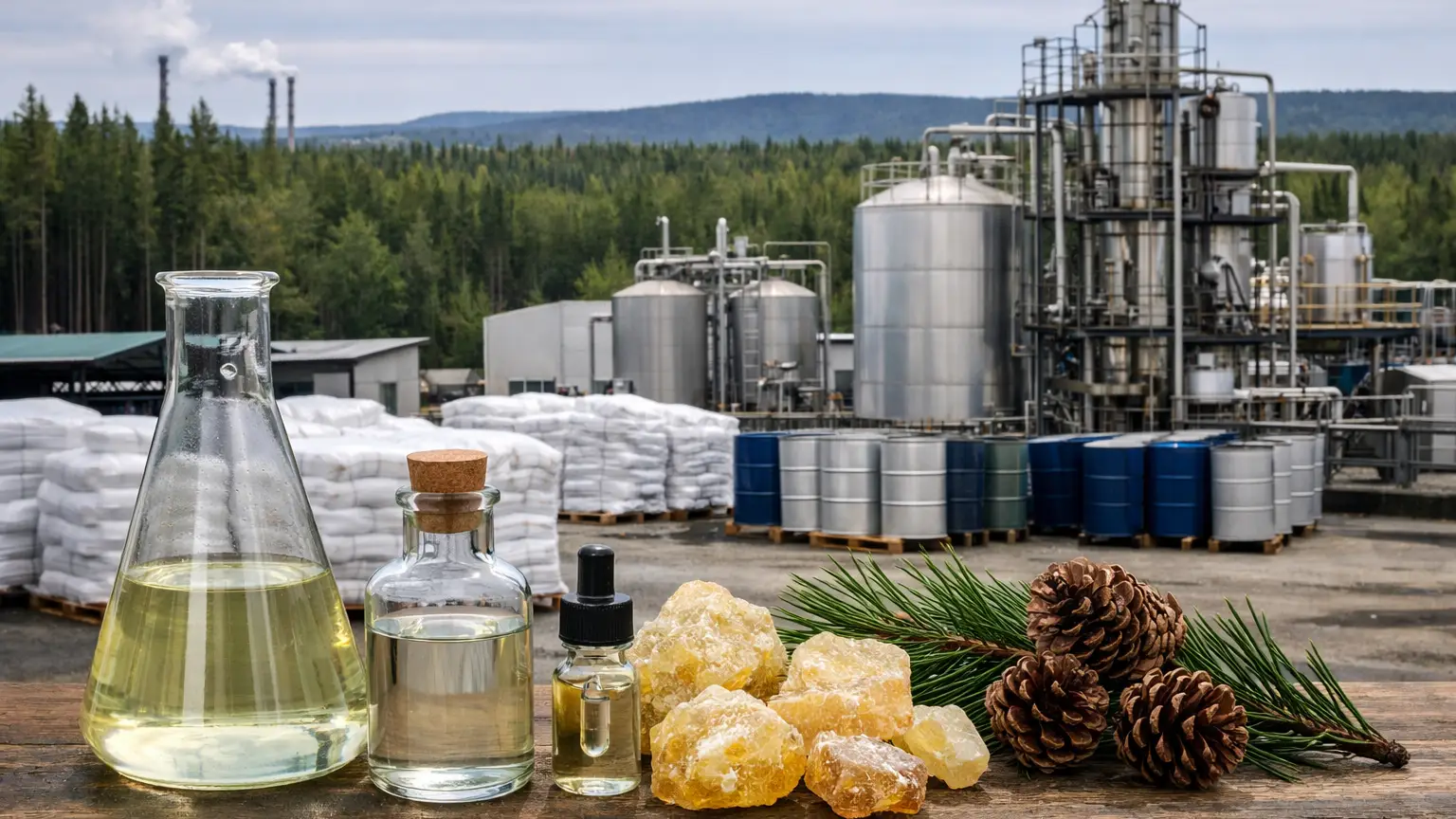
Asia's pine chemical industry is uniquely diverse, fueled by a combination of natural forest resources, managed plantations, and integrated processing facilities. Key producing nations include China, Indonesia, Vietnam, and India, each with distinct characteristics. China leads in both scale and vertical integration, with massive processing plants that fractionate crude Gum Turpentine into its constituent terpenes like Alpha Pinene and Beta Pinene. Indonesia and Vietnam are major sources of raw oleoresin, often from extensive Pinus merkusii plantations, supplying both domestic processors and the international market.
The process begins with the tapping of pine trees to collect the oleoresin, which is then distilled to produce crude Gum Turpentine and rosin. The turpentine, a complex mixture of terpenes, undergoes sophisticated fractional distillation under vacuum to isolate high-purity streams. The composition of the turpentine—specifically the ratio of Alpha Pinene to Beta Pinene—varies significantly by pine species and geographic origin. This variability directly impacts the strategic focus of downstream applications, making source traceability and consistent quality control paramount for industrial buyers across the region.
Alpha Pinene is not a single commodity but a product available in various grades defined by purity, enantiomeric ratio (the balance between (+)-α-Pinene and (-)-α-Pinene), and odor profile. Technical or industrial grade (85-95% purity) is widely used in solvents and synthesis. Fragrance grade (often >95% purity, with specific isomer ratios) is essential for perfumery. The highest pharmaceutical or flavor grades demand purities exceeding 98% with stringent documentation of origin and processing.
Its industrial applications are remarkably broad. In the fragrance and flavor industry, it is a key top-note ingredient, imparting fresh, piney, and woody aromas, and serves as a starting material for synthesizing other aroma chemicals like camphor and linalool. As a industrial solvent and cleaner, it is valued for its high solvency power, low toxicity compared to petrochemical alternatives, and biodegradability, finding use in specialty paints, adhesives, and eco-friendly cleaning products. Perhaps most significantly, Alpha Pinene is a vital chiral building block in pharmaceutical synthesis. Its unique structure is utilized in creating active pharmaceutical ingredients (APIs) for therapeutics, including certain antivirals and bronchodilators, where the specific enantiomer can be critical to drug efficacy.
Gum Turpentine is the lifeblood of the terpene industry. In Asia, it is traded both as a commodity in its crude form and as a strategically important raw material for dedicated fractionators. Its quality is assessed by pinene content, color, and moisture levels. A high-alpha pinene content (often 70-85% in Asian varieties) is particularly desirable for markets focused on fragrance, flavor, and synthesis, commanding premium pricing. The consistent and scalable supply of quality Gum Turpentine is therefore a critical success factor for the entire downstream value chain.
Beyond being a source for isolated terpenes, Gum Turpentine itself has direct applications. It is a traditional solvent in the paint and varnish industry. More innovatively, it is being explored as a bio-based feedstock for producing sustainable fuels and polymers, aligning with global circular economy goals. The management of this resource—balancing sustainable tapping practices to ensure long-term tree health with industrial demand—is a key topic of discussion among producers, governments, and sustainability organizations across Asia, influencing long-term market stability.
The Asian pine chemicals market is being transformed by several convergent trends. First, the powerful shift towards bio-based and natural products is accelerating. Consumer demand in cosmetics, personal care, and household products for ingredients perceived as natural and sustainable is driving formulators to replace synthetic aromas and solvents with terpene-based alternatives like Alpha Pinene. This "green chemistry" wave is creating premium market segments and encouraging investment in cleaner, more efficient distillation technologies.
Second, pharmaceutical and nutraceutical expansion in Asia is a major demand driver. The region's growing middle class, increased healthcare spending, and strong domestic API manufacturing sectors are fueling the need for high-purity chiral intermediates. Alpha Pinene, with its established role in synthesis, is poised to benefit directly. Furthermore, research into the bioactive properties of terpenes (e.g., anti-inflammatory, antimicrobial) is opening new avenues in functional ingredients and therapeutic applications, adding a layer of value beyond traditional uses.
Navigating the Asian market for Alpha Pinene and Gum Turpentine requires strategic sourcing. Buyers must evaluate suppliers not just on price, but on technical capability, consistency, and reliability. Key considerations include the supplier's control over the raw material source (owning plantations vs. open market procurement), their distillation and purification technology, and their ability to provide comprehensive technical data sheets (TDS), certificates of analysis (CoA), and safety documentation (SDS).
Logistics and regional trade dynamics also play a crucial role. Proximity to major ports, understanding import/export regulations for chemicals in different Asian countries, and managing the safe transportation of these flammable liquids are critical operational details. Establishing relationships with suppliers who have a pan-Asian presence or robust logistics partnerships can mitigate supply chain risks. The trend is moving towards partnerships with suppliers who can offer not just a product, but application support, consistent quality assurance, and adaptability to specific technical requirements, from kilogram-scale R&D quantities to multi-ton container shipments.
The trajectory for Alpha Pinene and the broader Pine Chemicals market in Asia points toward sustained, innovation-led growth through 2026. Driven by the powerful megatrends of sustainability, wellness, and regional industrial development, these natural compounds are transitioning from traditional commodities to high-value, specialty ingredients. The ability of industry stakeholders—from Gum Turpentine producers to advanced chemical processors—to invest in quality, embrace sustainable practices, and collaborate on application development will determine their success in this evolving landscape.
Disclaimer: This article is provided for informational and market insight purposes only. It is not intended as technical, safety, or professional advice. The information presented, including market trends and application examples, should be independently verified. For specific applications, safety protocols, and technical specifications, readers must consult relevant Safety Data Sheets (SDS), industry experts, and conduct their own due diligence. We strongly advise contacting our technical team or qualified professionals for guidance on the suitability of Alpha Pinene, Gum Turpentine, or any chemical product for your particular use case.
We're committed to your privacy. Tradeasia uses the information you provide to us to contact you about our relevant content, products, and services. For more information, check out our privacy policy.


 English
 Indonesian
 简体字
简体字
 العربية
 Español
 Français
 Português
 日本語
日本語
 한국어
한국어
 Tiếng Việt