Explore our network of country and industry based websites to access localized information, product offerings, and business services across our group.
Log in to start sending quotation requests for any product.
Don't have an account? Sign Up Here
Home How Glycerol Ester of Rosin is Shaping Asia's Beauty Industry 2026
Trade Insights | Applications and Buyers | 31 March 2026
Introduction
Understanding the Core Ingredient: Glycerol Ester of Rosin
The Driving Forces Behind Asia's Cosmetic Boom
Key Applications in Modern Cosmetic Formulations
Sourcing and Quality: The Role of Specialized Suppliers
Conclusion
The Asia-Pacific cosmetic industry is not just growing; it is undergoing a profound transformation. Fueled by rising disposable incomes, a digitally savvy consumer base, and a powerful shift towards clean, sustainable beauty, the region demands innovation at every level of formulation. At the heart of this quiet revolution lies a category of ingredients often overlooked yet fundamentally essential: specialty additives that provide performance, stability, and sensory appeal. Among these, derivatives of natural pine chemicals, particularly Glycerol Ester of Rosin (GER), are emerging as unsung heroes.
As brands strive to replace synthetic polymers and questionable ingredients with natural, effective alternatives, the unique properties of Gum Rosin esters become invaluable. This article delves into how Glycerol Ester of Rosin is shaping product development across Asia, from Korea's cutting-edge skincare serums to India's vibrant color cosmetics and Southeast Asia's long-wearing makeup. We will explore its functional benefits, diverse applications, and why partnering with a knowledgeable regional supplier like ChemtradeAsia is critical for brands aiming to lead in the 2026 market and beyond.
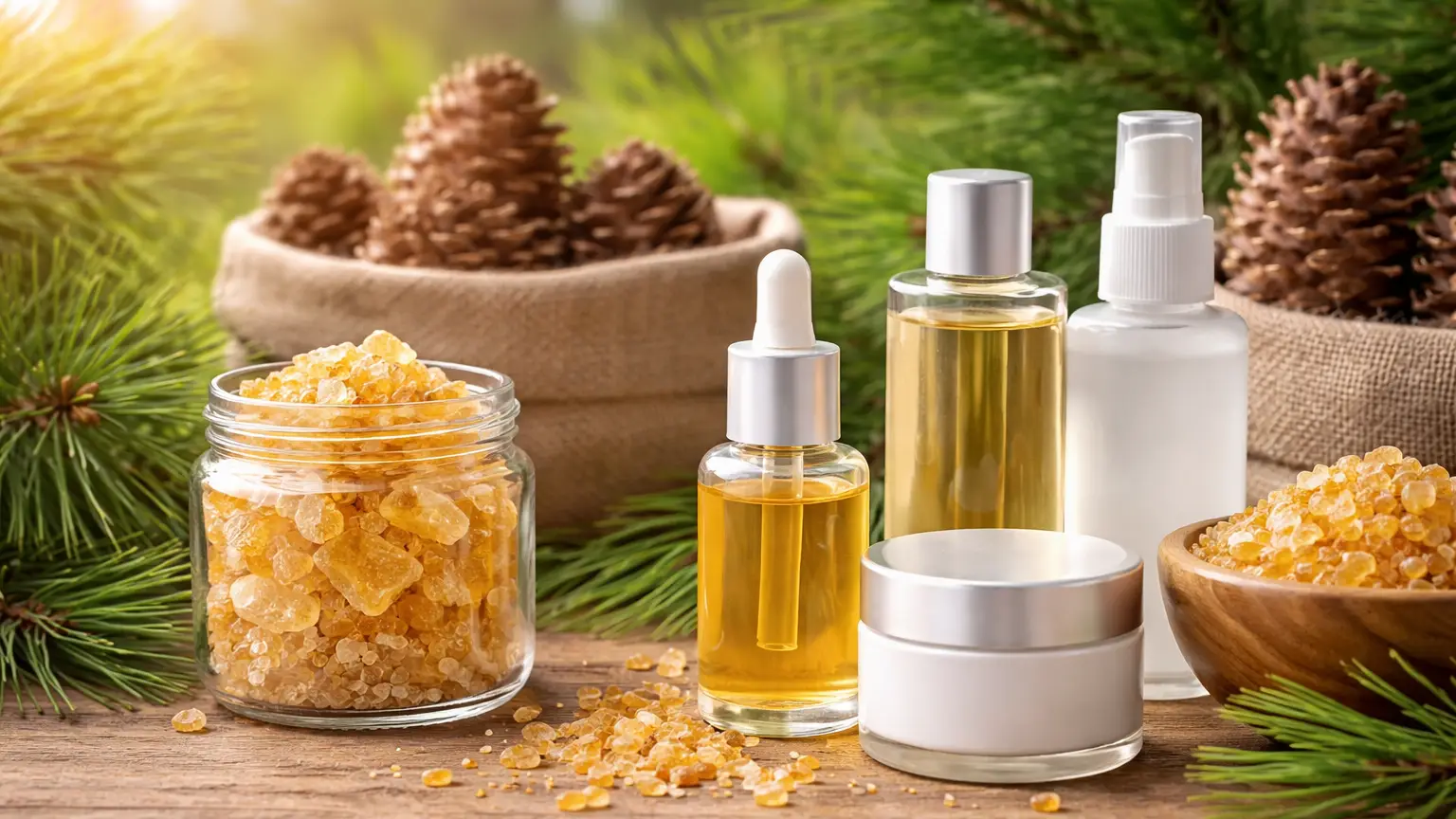
Glycerol Ester of Rosin is a chemically modified natural product derived from Gum Rosin, which is itself obtained from the oleoresin of pine trees. Through a process of esterification with glycerol, the raw rosin is transformed into a more stable, tackifying resin with superior compatibility for cosmetic use. This process mitigates the oxidative tendencies and acidity of pure rosin, resulting in an ingredient that is odorless, non-crystallizing, and possesses excellent adhesive and film-forming properties. Its natural origin aligns perfectly with the "clean beauty" and "naturally derived" trends dominating consumer preferences.
In specification terms, high-quality cosmetic-grade GER is characterized by a pale color (typically a light yellow), a specific softening point (usually between 80-90°C), and high stability against oxidation. Its key functional benefits in cosmetics include strong adhesive strength, which is crucial for products that need to stay in place; excellent water resistance, enhancing the longevity of formulations; and good compatibility with a wide range of cosmetic oils, waxes, and polymers. Compared to purely synthetic tackifiers, GER offers a compelling narrative of bio-based content without sacrificing performance, making it a versatile tool for formulators.
Asia's cosmetic market is projected to maintain a dominant share of the global industry, with growth driven by several interconnected factors. The rapid expansion of e-commerce and social media platforms like Douyin, Shopee, and Instagram has democratized beauty trends, creating instant demand for innovative products. Korean "glass skin" trends, Japanese minimalist routines, and Chinese "guochao" (national trend) brands all require high-performance ingredients that can deliver visible results and unique textures. Furthermore, a young, increasingly affluent population is willing to invest in premium personal care, seeking both efficacy and ethical production.
Simultaneously, regulatory landscapes and consumer awareness are pushing for greater transparency and sustainability. Markets like South Korea, Japan, and Australia have stringent cosmetic regulations, while consumers across India, Southeast Asia, and the Middle East are increasingly scrutinizing ingredient lists. This creates a dual demand: for ingredients that are both high-performing and responsibly sourced. Pine chemicals like Glycerol Ester of Rosin fit this niche perfectly, as they are derived from a renewable resource (pine trees) and offer a natural alternative to petroleum-based adhesives and film-formers, directly addressing the "green chemistry" demands of the modern Asian consumer.
The functional properties of Glycerol Ester of Rosin translate into specific, high-value applications across multiple cosmetic categories. In color cosmetics, it is a cornerstone for long-wearing products. Its excellent adhesive properties make it ideal for mascaras and eyeliners, ensuring pigment adheres to lashes and lids without smudging. In lipsticks and lip glosses, GER enhances wear time and provides a comfortable, non-sticky film that locks in color and moisture. For foundation and concealer, it helps create a smooth, second-skin finish that resists transfer and fading in humid climates prevalent across much of Asia.
Beyond color, GER finds significant use in skincare and sun care. In patch technology, such as under-eye gels or treatment patches, its tackiness is crucial for ensuring the patch adheres securely to the skin for extended periods, allowing for optimal ingredient delivery. In sunscreen formulations, particularly water-resistant sunscreens, GER helps form a durable, protective film on the skin that maintains its SPF efficacy during swimming or sweating. Its compatibility with other ingredients allows formulators to create elegant, non-greasy textures—a critical sensory attribute for Asian consumers who often dislike heavy, occlusive products.
For cosmetic brands aiming to leverage Glycerol Ester of Rosin, consistent quality and reliable supply chains are non-negotiable. Variations in the source of Gum Rosin, the esterification process, and purification can lead to differences in color, odor, and performance—factors that can make or break a luxury cosmetic formulation. This is where specialized regional suppliers become strategic partners. A supplier with deep expertise in pine chemicals understands these nuances and can provide cosmetic-grade GER with the specific specifications required for beauty applications.
Entities like ChemtradeAsia, with its regional portals such as chemtradeasia.com, chemtradeasia.sg for Southeast Asia, and chemtradeasia.ae for the Middle East, provide crucial localized access. They offer more than just a product; they provide technical support, regulatory guidance, and assurance of a supply chain that can navigate regional complexities. For a brand formulating a new waterproof mascara in Indonesia or a long-lasting lip stain in Vietnam, having a supplier that can ensure batch-to-batch consistency, provide necessary documentation (like Certificates of Analysis and MSDS/SDS), and offer formulation advice is invaluable for speeding up R&D and ensuring market success.
As we look toward 2026, the trajectory of Asia's cosmetic industry is clear: it will be defined by smarter, more sustainable, and more sophisticated formulations. In this landscape, multifunctional, naturally derived ingredients like Glycerol Ester of Rosin will move from niche additives to mainstream essentials. Its ability to solve key formulation challenges—adhesion, longevity, and water resistance—while aligning with the powerful trends of clean beauty and sustainability, positions it as a critical ingredient for innovation. From K-beauty labs to emerging beauty hubs in India and the ASEAN region, GER is enabling the creation of products that meet the exacting standards of today's discerning Asian consumer.
For brands and formulators, the path forward involves not just recognizing the potential of this pine chemical but also forging partnerships with expert suppliers who can ensure quality and provide the technical insights necessary for successful integration. By embracing such ingredients, the Asian cosmetic industry can continue to lead the world in beauty innovation that is as responsible as it is remarkable.
Disclaimer: This article is for informational and market insight purposes only. It is not intended as technical, safety, or professional formulation advice. The applications and data mentioned are based on general industry trends and should not be relied upon for specific product development. We strongly advise readers to independently verify all information, consult official technical documentation and safety data sheets (MSDS/SDS), and engage with qualified experts or contact our technical team for guidance tailored to your specific requirements and regulatory environment.
We're committed to your privacy. Tradeasia uses the information you provide to us to contact you about our relevant content, products, and services. For more information, check out our privacy policy.


 English
 Indonesian
 简体字
简体字
 العربية
 Español
 Français
 Português
 日本語
日本語
 한국어
한국어
 Tiếng Việt




















