Explore our network of country and industry based websites to access localized information, product offerings, and business services across our group.
Log in to start sending quotation requests for any product.
Don't have an account? Sign Up Here
Home TOFA in Asia: Pioneering Eco-Friendly Leather Solutions 2026
Trade Insights | Applications and Buyers | 01 April 2026
Introduction
Understanding Tall Oil Fatty Acid (TOFA): A Sustainable Feedstock
The Asian Leather Industry: Challenges and the Sustainability Imperative
Key Applications of TOFA in Leather Processing
Benefits of TOFA for Leather Manufacturers
Market Outlook and Sourcing in Asia
Conclusion
The Asian leather industry, a cornerstone of global manufacturing, stands at a critical juncture. Long celebrated for its scale and craftsmanship, the sector now faces mounting pressure from evolving environmental regulations, shifting consumer preferences towards sustainable products, and the relentless need for cost optimization. In this landscape, innovation in chemical inputs is not just an advantage but a necessity for survival and growth. Emerging as a transformative solution is Tall Oil Fatty Acid (TOFA), a versatile oleochemical derived from the sustainable kraft pulping process of pine wood. This article delves into how TOFA and related tall oil derivatives are poised to redefine leather processing across Asia, offering a compelling blend of ecological responsibility and enhanced performance as we look towards 2026 and beyond.
Traditionally reliant on petrochemical-based additives and fats, the industry's search for bio-based alternatives has intensified. TOFA, a natural mixture of unsaturated fatty acids like oleic and linoleic acids, presents a powerful answer. Its unique chemical profile makes it an excellent candidate for various stages of leather production, from fatliquoring to softening. As platforms like chemtradeasia.com and pinechemicalsasia.com facilitate greater access to these specialized oleochemicals, Asian tanneries are increasingly positioned to integrate TOFA into their operations, driving a new era of eco-conscious leather manufacturing.
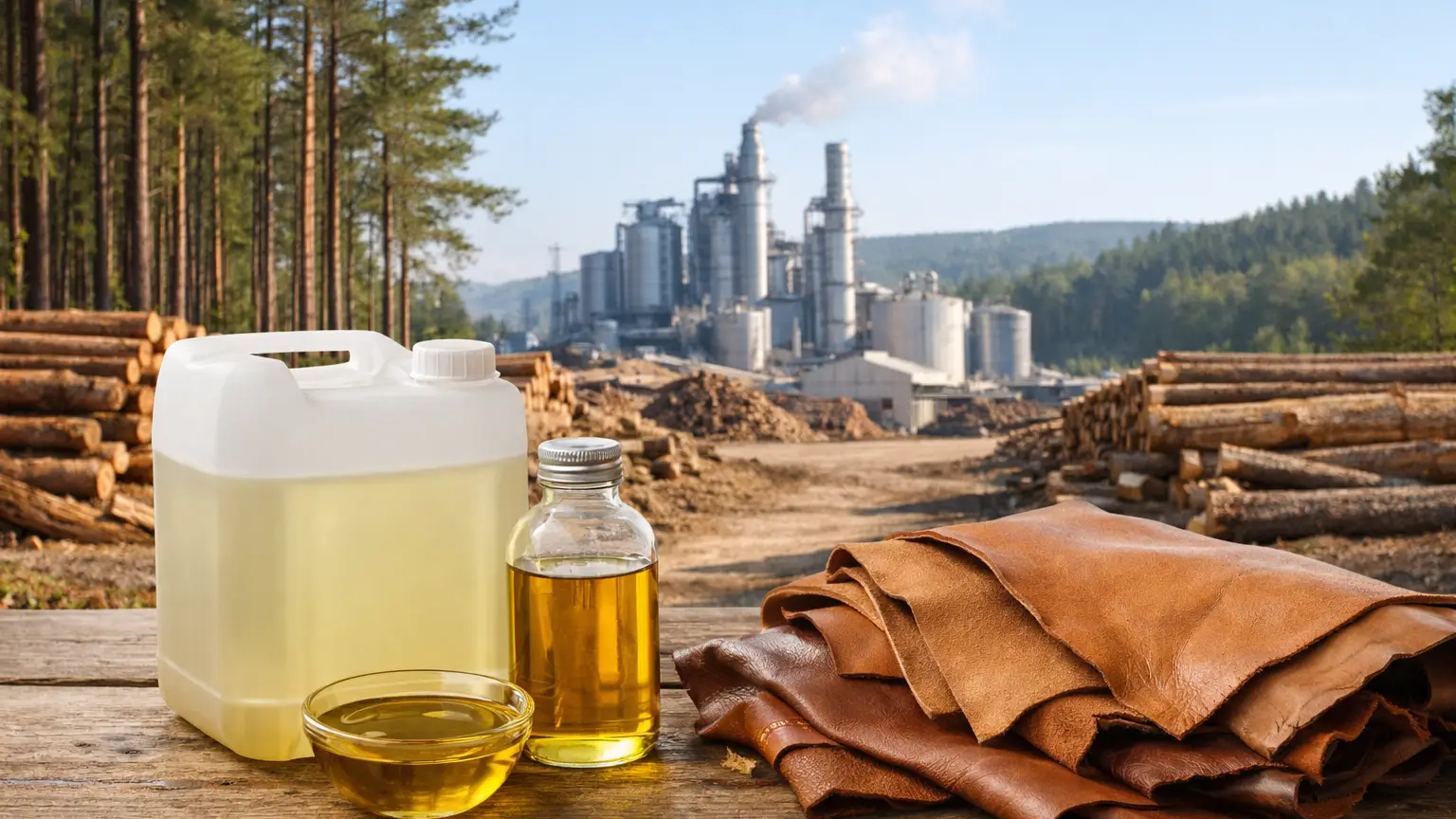
Tall Oil Fatty Acid (TOFA) is a co-product of the kraft pulping process, where pine wood chips are digested to produce cellulose pulp. The crude tall oil collected is then fractionated through distillation to separate TOFA from rosin acids and other neutrals. Chemically, TOFA is characterized by a high content of C18 unsaturated fatty acids, primarily oleic acid (typically 40-50%) and linoleic acid (30-40%), along with smaller amounts of saturated acids and resin acids. This composition grants it excellent fluidity, reactivity, and compatibility with other chemicals, making it a prized raw material in oleochemicals production.
Unlike traditional vegetable oils, TOFA does not compete with food supply chains, marking it as a truly sustainable, second-generation bio-based feedstock. Its production leverages a waste stream of the paper industry, adhering to circular economy principles. The quality and consistency of TOFA can vary based on the pine species and distillation process, with key specifications including acid value, saponification value, iodine value (indicating degree of unsaturation), and color. For leather applications, a lighter color and specific fatty acid profile are often preferred to ensure final leather quality is not compromised.
Asia dominates global leather production, with major hubs in countries like China, India, Vietnam, Bangladesh, and Indonesia. This concentration brings specific challenges. Environmental scrutiny is escalating, with stricter regulations on wastewater discharge containing harmful chemicals like chromium, sulfides, and conventional synthetic tannins. Furthermore, international brands and consumers are demanding full transparency and sustainable credentials across the supply chain. The industry also grapples with volatile costs of raw hides and traditional chemicals, often tied to the petroleum market, squeezing profit margins for tanneries.
This multifaceted pressure is catalyzing a significant shift. Tanneries are actively investing in cleaner technologies and seeking bio-based chemical alternatives that can reduce environmental footprint without sacrificing quality. The demand for "green leather" or "eco-leather" is no longer a niche trend but a mainstream market requirement. In this context, TOFA-based products offer a strategic pathway. They provide a renewable, often cost-stable alternative to petrochemicals, helping manufacturers comply with regulations, meet brand sustainability mandates, and appeal to the conscious consumer, thereby securing their position in the value chain.
The integration of Tall Oil Fatty Acid into leather processing is multifaceted, enhancing both the manufacturing process and the final product. One of the primary applications is in fatliquoring. Here, TOFA is sulfated or sulfonated to create anionic fatliquors. These agents are emulsified in water and applied to wet leather to lubricate the fiber network, imparting essential softness, flexibility, and tensile strength. The unsaturated nature of TOFA allows for good penetration and even distribution, preventing a greasy feel and ensuring a uniform, supple leather.
Beyond fatliquoring, TOFA serves as a crucial building block for synthetic lubricants and softening agents. It can be ethoxylated to produce non-ionic emulsifiers that are stable over a wide pH range, useful in various bath applications. Furthermore, TOFA is used in the production of soaps for leather finishing and as a raw material for ester-based plasticizers that improve low-temperature flexibility. Its derivatives also find use in water-repellent treatments, where they are reacted to form hydrophobic barriers on the leather surface. Compared to purely synthetic options, TOFA-based products often offer better biodegradability and a reduced toxicological profile.
Adopting TOFA-based chemicals delivers a compelling value proposition for Asian leather manufacturers. The foremost benefit is enhanced sustainability. As a bio-based, renewable resource with a lower carbon footprint than petrochemical alternatives, TOFA directly contributes to greener production processes and helps tanneries achieve certifications critical for export markets. This aligns perfectly with global ESG (Environmental, Social, and Governance) goals demanded by leading brands.
From a performance and economic standpoint, the benefits are equally significant. TOFA derivatives often provide excellent lubrication and softening efficiency, leading to high-quality leather with desirable physical properties like tear strength and durability. In many cases, they offer cost advantages due to the relative price stability of tall oil compared to volatile crude oil markets. Additionally, the good biodegradability of these products can simplify wastewater treatment challenges. By leveraging suppliers accessible through platforms like chemtradeasia.in for India or chemtradeasia.co.id for Indonesia, manufacturers can source these solutions efficiently, integrating them into existing processes with minimal disruption while future-proofing their operations against regulatory and market shifts.
The market for Tall Oil Fatty Acid and its derivatives in Asia is on a robust growth trajectory, projected to expand significantly through 2026. This growth is fueled by the factors previously discussed: regulatory push, consumer pull, and the industry's own drive for efficiency. While Asia is a massive consumer, local production of crude tall oil is limited, with major global production centered in North America and Scandinavia. Consequently, a well-established import and distribution network is vital for supply chain security.
This is where specialized chemical trading and sourcing platforms become indispensable. Regional hubs like Singapore (via chemtradeasia.sg) and the UAE (via chemtradeasia.ae) serve as crucial gateways for the distribution of pine chemicals and oleochemicals across the continent. These platforms connect Asian tanneries with reliable global producers of high-quality TOFA. When sourcing, manufacturers should prioritize suppliers who provide consistent specifications, comprehensive technical data sheets (TDS), and safety documentation (SDS/MSDS). Partnering with knowledgeable distributors who understand both the TOFA market and the technical nuances of leather processing can be a key strategic advantage in implementing these eco-solutions successfully.
As the Asian leather industry marches towards a more sustainable and competitive future, Tall Oil Fatty Acid (TOFA) stands out as a cornerstone innovation. Its unique origin as a circular economy by-product, combined with its versatile chemical functionality, makes it an ideal candidate to replace conventional, less sustainable additives in fatliquoring, softening, and finishing processes. The adoption of TOFA-based oleochemicals addresses the triple challenge of environmental compliance, cost management, and meeting premium market demands for eco-friendly leather.
The pathway to 2026 will see an accelerated integration of these bio-based solutions, facilitated by evolving supply chains and digital platforms that connect demand with supply across regions. For forward-thinking tanneries in Asia, embracing TOFA is not merely a chemical substitution but a strategic upgrade—one that enhances product value, secures market access, and aligns with the global sustainability imperative. The transformation led by tall oil derivatives is a clear indicator of an industry innovating to preserve both its craft and the planet.
Disclaimer: This article is for informational and market insight purposes only. It is not intended as technical, safety, or professional advice. The information presented regarding applications, benefits, and market trends should be verified independently. For specific applications, formulations, or handling procedures, readers must consult official technical data sheets, safety data sheets (SDS/MSDS), and engage with qualified technical experts. We strongly advise contacting our specialized team or your chemical supplier for precise guidance tailored to your operational requirements.
We're committed to your privacy. Tradeasia uses the information you provide to us to contact you about our relevant content, products, and services. For more information, check out our privacy policy.


 English
 Indonesian
 简体字
简体字
 العربية
 Español
 Français
 Português
 日本語
日本語
 한국어
한국어
 Tiếng Việt