Share this product
Beta Pinene
- Origin
- India
- CAS Number
- 127-91-3
- HS Code
- 2902.19.00
Basic Info
- IUPAC Name
- (6,6-dimethyl-4-methylenebicyclo[3.1.1]hept-2-yl)methane
- Molecular Formula
- C10H16
- Molecular Weight (g/mol)
- 136.2300
- Synonyms & Trade Names
- Beta-pinene; β-Pinene; (1S)-2(10)-pinene; Pin-2(10)-ene
- Purity / Assay (%)
- 95% min
- Grade / Quality Level
- Technical Grade
- Physical Form
- Liquid
- Concentration
- Pure substance
- Appearance / Color
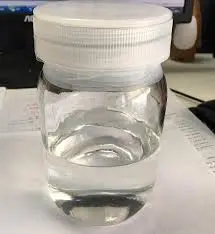
- Clear to slightly colored liquid
- Odor
- Turpentine-like
- Melting Point (°C)
- -61.0000
- Boiling Point (°C)
- 164
- Density (g/cm³)
- 0.8710
- Solubility in Water
- Insoluble in water
- Signal Word
- Warning
- UN Number
- 2319
- GHS Hazard Class
- Flammable liquids; Skin irritant; Skin sensitizer; Aquatic hazard
- H-Statements
- H226|H304|H315|H317|H410
- P-Statements
- P210|P261|P273|P280|P301+P330+P331
- REACH Status
- Registered
- Drug Precursor Status
- Non-precursor
- Storage Class (GHS)
- 3
- Storage Conditions
- Cool, dry, ventilated; away from ignition
Categories
Technical Document
Brief Overview
Beta pinene is a colorless liquid, soluble in alcohol, but not water. It has a woody-green pine-like smell. It occurs naturally in rosemary, parsley, dill, basil and rose, There are two structural isomers found in nature: a-pinene and β-pinene.
Manufacturing Process
Beta pinene is produced by putting alpha-pinene in a reaction kettle, adding a catalyst, raising the temperature to 120-180 degrees Celsius, and carrying out an isomerization reaction for 0.5-1 hour with a palladium catalyst using diatomite as a carrier. The invention discloses a method for isomerizing alpha-pinene into beta-pinene using a palladium catalyst and diatomite as the carrier, so that the method is simple in process and easy to operate, a catalyst method is simple, and high-purity beta-pinene is obtained; thus, the method provides a new idea for beta-pinene preparation.