
Share this product
Dipentene
- Origin
- Indonesia
- CAS Number
- 138-86-3
- HS Code
- -
Basic Info
- IUPAC Name
- 1-methyl-4-(prop-1-en-2-yl)cyclohexene
- Molecular Formula
- C10H16
- Molecular Weight (g/mol)
- 136.2300
- Synonyms & Trade Names
- Dipentene; Limonene racemate; dl-Limonene; Technical limonene
- Purity / Assay (%)
- 90% min
- Grade / Quality Level
- Technical Grade
- Physical Form
- Liquid
- Concentration
- Pure substance
- Appearance / Color
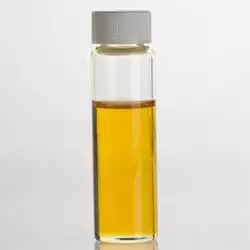
- Clear to slightly colored liquid
- Odor
- Citrus-like
- Melting Point (°C)
- -97.0000
- Boiling Point (°C)
- 178
- Density (g/cm³)
- 0.8400
- Solubility in Water
- Insoluble
- Signal Word
- Warning
- UN Number
- 2052
- GHS Hazard Class
- Flammable; Skin sensitizer; Aquatic hazard
- H-Statements
- H226|H315|H317|H410
- P-Statements
- P210|P261|P272|P273|P280
- REACH Status
- Registered
- Drug Precursor Status
- Non-precursor
- Storage Class (GHS)
- 3
- Storage Conditions
- Cool, dry; away from ignition
Categories
Technical Document
Brief Overview
Dipentene (also called D-Limonene), is a terpene liquid found in various volatile oils such as cardamon, mace, nutmeg , turpentine oil. Dipentene is mainly composed of Limonene, beta-Phellandrene, Myrcene and other terpenes.
Manufacturing Process
In nature, limonene is formed from the molecule geranyl pyrophosphate, via cyclization of a neryl carbocation or its equivalent. In the final step, the C=C double bond is formed through the loss of a proton from the carbocation.
Commercially, d-limonene is obtained from citrus fruits through the process of steam distillation and centrifugal separation. Commonly, orange oil is extracted as a by-product of orange juice production by centrifugation. The orange oil obtained composes greater than 90% of d-limonene. Further separation takes place via steam distillation, where steam is passed through the orange oil to distill limonene. Limonene is relatively stable and can be distilled without decomposition, but at elevated temperatures, it cracks to form isoprene. The limonene extracted is commonly D-limonene, but at 300°C it racemizes to dipentene.